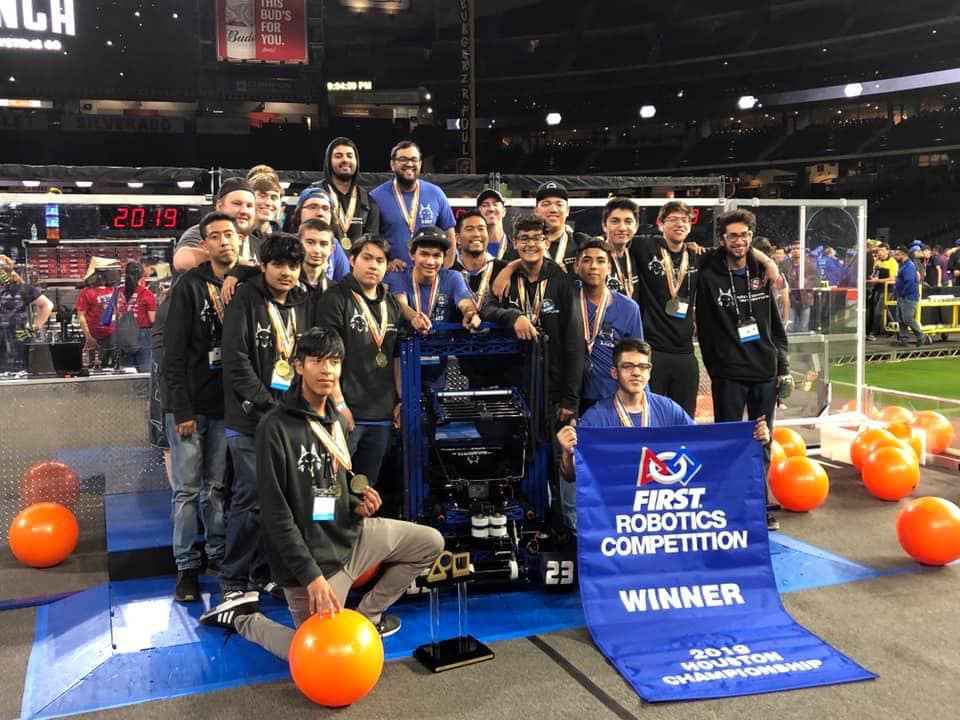
We’re thrilled to announce that MadTown Robotics won the 2019 World Championship at Houston!
Purl’s is a proud sponsor of MadTown Robotics, which was founded in 2004 at Madera High School by math teacher Alan Hollman. The original four-student team of young robotic engineers soon grew and is now comprised of more than 50 students from three local high schools: Madera High School, Madera South High School, and Sherman Thomas. MadTown Robotics is dedicated to furthering the curiosity and knowledge of students and training them to excel at teamwork.
The team has received many awards over the past fourteen years, including winning the Central Valley Regional and the Sacramento Regional Championship. Now they’ve gone all the way to win the World Championship! Congratulations to all the winners from our family at Purl’s!
At Purl’s Sheet Metal & Air Conditioning, “Quality Is the Cornerstone of Our Success!”
Continue Reading
 Of all the troubles you might encounter with your air conditioning system, dirty sock syndrome is the one that triggers the most immediate reaction. It’s right there in the name—it sounds like something you absolutely don’t want in your house!
 As an
As an 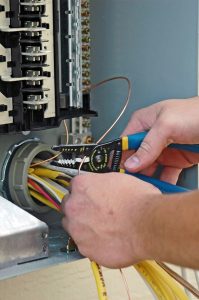 Air conditioners are complicated electrical devices. The combination of an intricate electrical system and the use of chemical refrigerant makes it tricky for a non-professional to be able to diagnose what’s wrong with an air conditioner, let alone understand how to fix it.
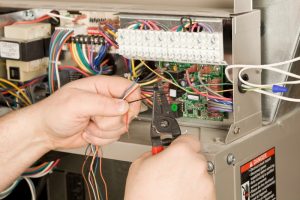 Whenever an air conditioning system abruptly shuts down—the fan won’t come on, the compressor won’t come on—one of the first things we recommend homeowners check is their electrical panel. A tripped circuit breaker might have caused the air conditioning system to lose power. Resetting the breaker may solve the problem.
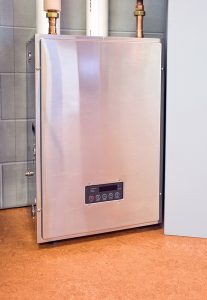 You may have heard about the tankless water heater as a replacement option for the standard storage tank water heater. A tankless water heater applies heat to the water that passes through its heat exchanger, so it heats up water whenever there’s a demand for it. When a hot water tap comes on, water starts to flow through the heat exchanger, which activates it and turns on the gas jets. The heat only remains on when the water is moving, and shuts off when the demand stops. There’s no need to store the water at any point.
 We’ve written before about the signs to watch for that will warn you it’s time to schedule professional
  When your home’s air conditioning system is running during the summer, you will occasionally hear the sound of water dripping coming from the indoor cabinet. This is normal—you are hearing the sound of the water condensation that collects along the evaporator coil dripping down into a pan beneath it. This water (called condensate) is a standard part of how your central air conditioning system removes heat from the air. Once the water collects in the condensate pan, it leaves the house through a drain and line that leads to the outside.